On Sunday, July 20, I visited the Musée Jacquemart-André to see the work of my favorite artist, Artemisia Gentileschi. I was lucky to catch this exhibition when I did, as it only runs through August 2025!
The visit started with exploring the mansion, located just down the road from the Arc de Triomphe. Built at the end of the 19th century, the mansion belonged to art collectors Edouard Andre and his wife, Nelie Jacquemart. The mansion currently houses temporary exhibitions and authentic 19th-century rooms, including an indoor garden, private bedrooms, lounges, and lavish hallways.
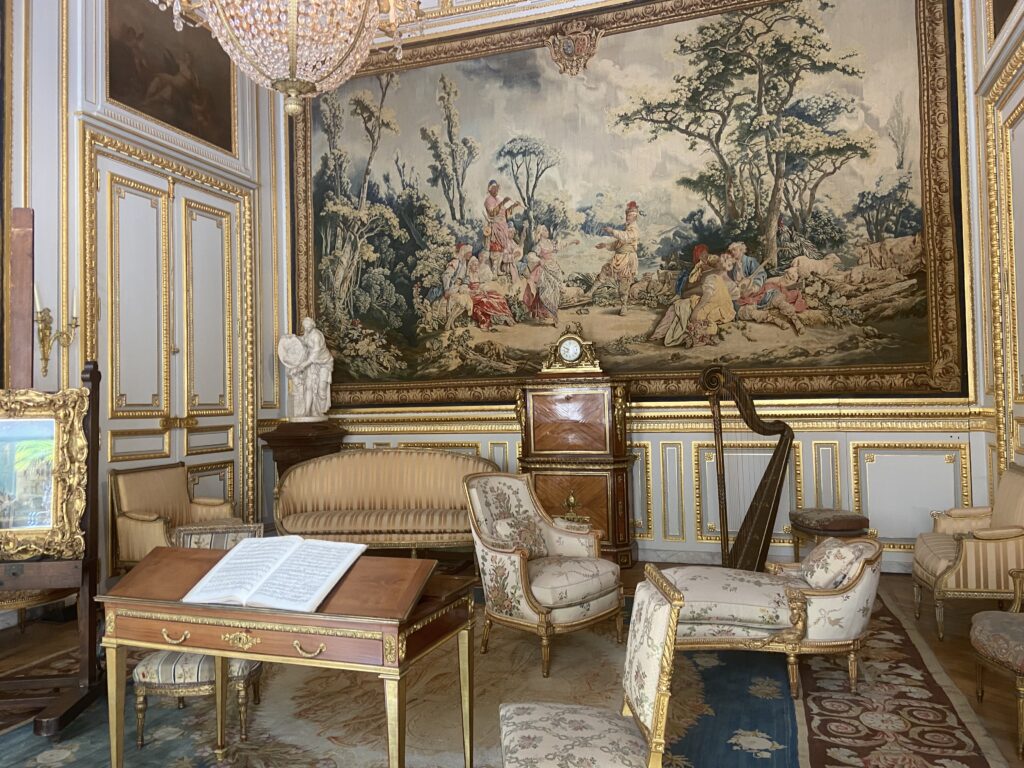
Pictured here is the “Tapestry Room,” and you can see why!
After exploring the main rooms in the estate, I sauntered up the grand spiral staircase, which led me to the beginning of the art exhibition. Allow me to nerd out, because Gentileschi was a badass.
Artemisia Gentileschi (1593-1653) was an Italian painter who is considered one of the most accomplished Baroque artists. She was introduced to art at an early age by her father, Orazio Gentileschi, who was also a famous artist. At just 17 years old, she created Susanna and the Elders, which immediately got her recognized for her exceptional painting skills. Despite living in an era where female artists were generally not accepted, she was the first woman to attend the Academy of Fine Arts in Florence, Italy.
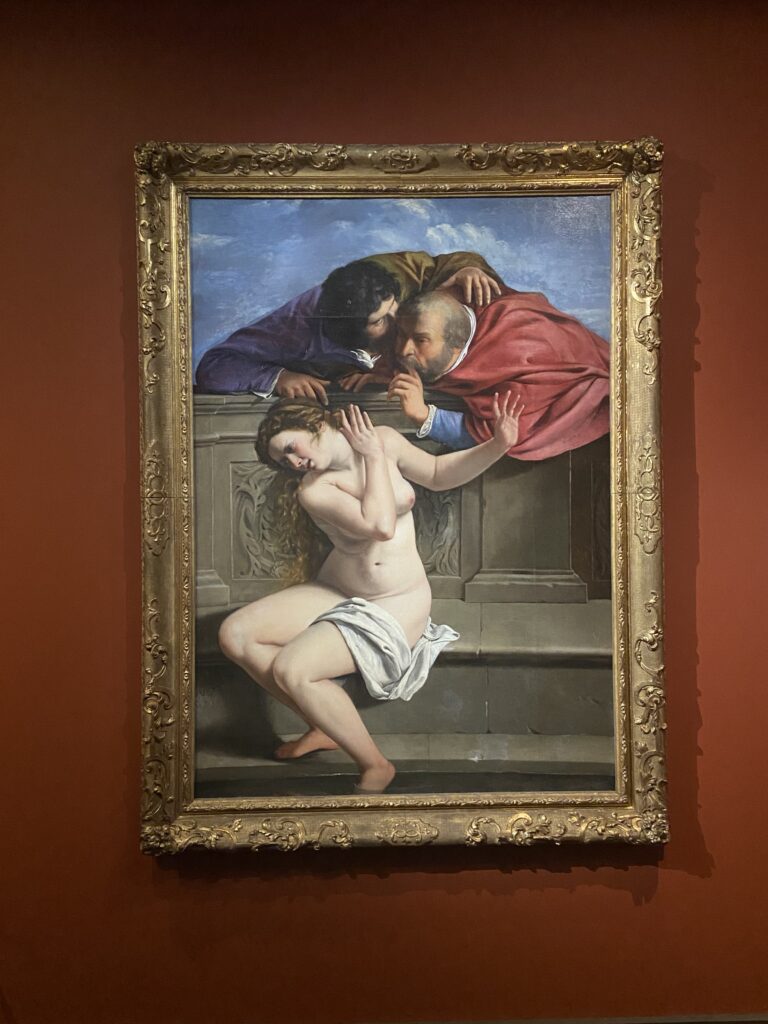
Susanna and the Elders, 1610, oil on canvas
In 1611, she was sexually assaulted by her father’s colleague. Following a harrowing trial, her assailant was found guilty and sentenced to exile. Following these horrific events in her life, Gentileschi poured herself into her art, often painting heroines who triumphed over male figures, as demonstrated in her pieces Judith Beheading Holofernes and Jael and Sisera.
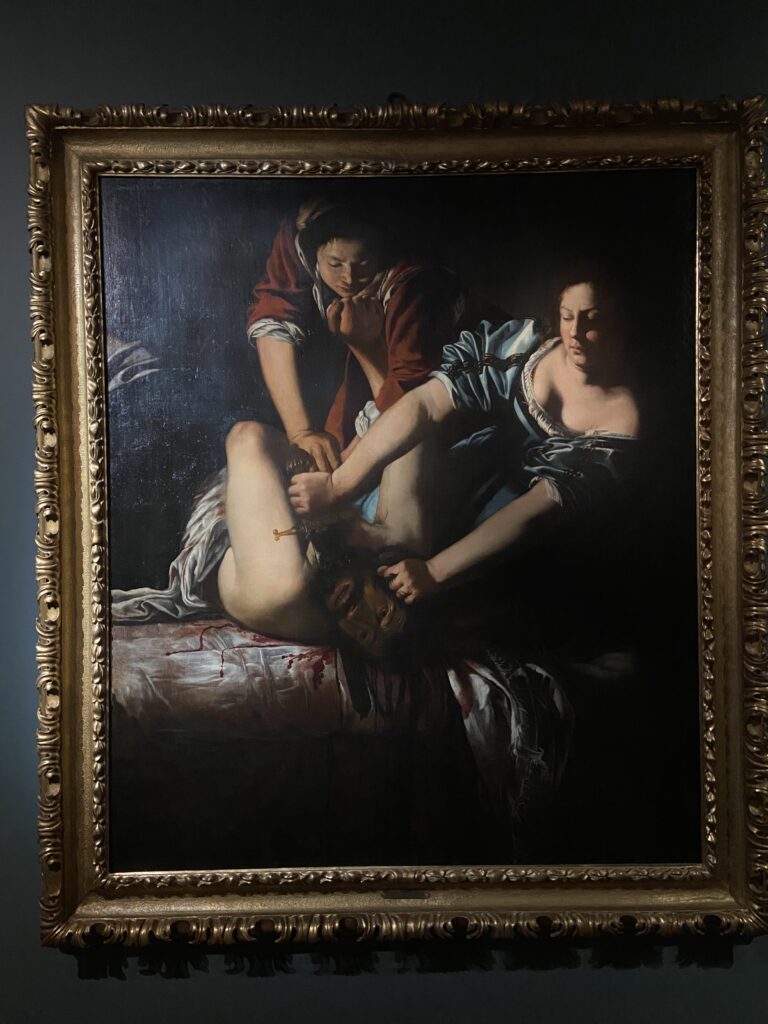
Judith Beheading Holofernes, 1620, oil on canvas
Gentileschi was inspired by biblical and mythological stories, most of which center women. Some art historians claim Gentileschi’s art is semi-autobiographical, as she often painted female figures in her likeness. She is also known for her depictions of the female nude, using her own body as a reference. This brought a woman’s touch to a painting tradition dominated by men, intentionally flipping the script and thus solidifying herself as a key figure in feminist art.
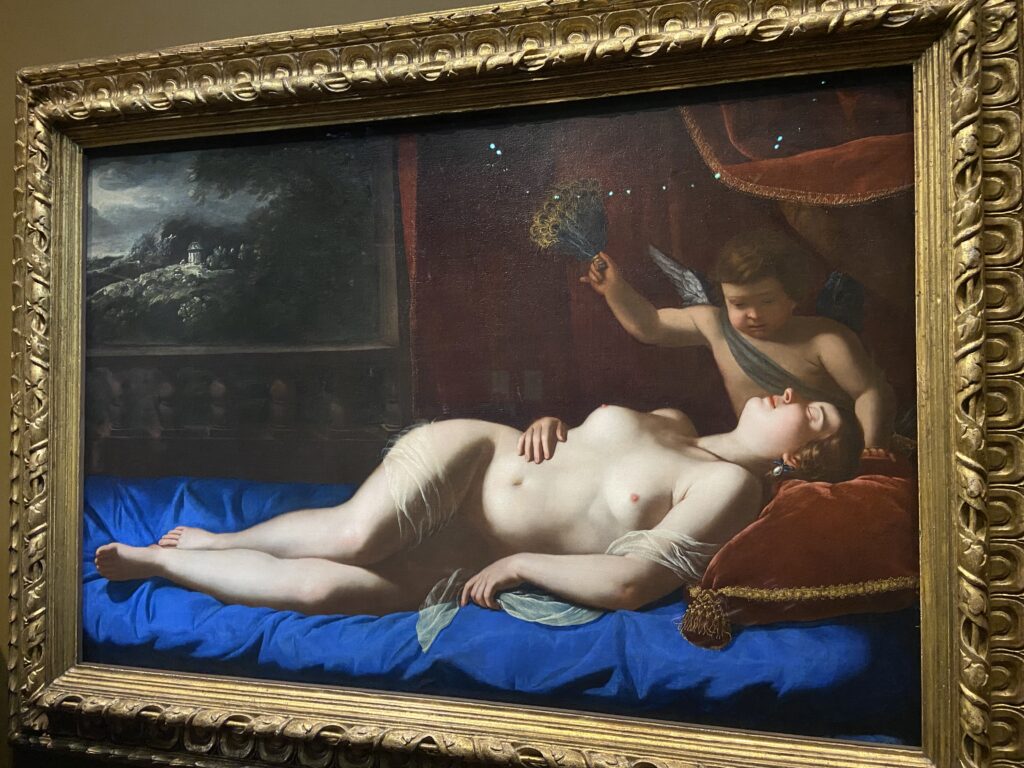
Venus and Cupid (Sleeping Venus), 1623, oil on canvas
Her technical mastery of portraiture, refined use of texture and color, and realistic skin tones demonstrate her extraordinary skill and surpass that of another famous Baroque artist whom she studied, Caravaggio. When comparing Caravaggio’s depiction of Judith slaying Holofernes and Gentileschi’s, hers is much more realistic, highlighting the agency of the women and the blood spurting from Holofernes’ neck. Gentileschi also understands that it would take a lot of power for a significantly smaller woman to kill an extremely large army general such as Holofernes, unlike the male artists who depict Judith meekly stabbing him.
One marriage, daughter, and love affair later, Gentileschi ended up in Naples, Italy, for the last 25 years of her life, continuing her work. She also spent some time in London, England, at the invitation of King Charles I, for whom her father was once the court painter. Information about her death is not well-known, but her legacy is extremely relevant.

Self Portrait as Saint Catherine of Alexandria, 1615-1617, oil on canvas
Out of the numerous self-portraits she made, I believe this one encapsulates the spirit of Artemisia Gentileschi the best. She depicts herself as Saint Catherine of Alexandria, who was a Christian saint martyred in the 4th century. She leans on a broken wheel with iron spikes, which was the wheel on which the saint was bound and tortured, just like Gentileschi was tortured to prove her verity during the trial following her assault. Despite the horrendous acts she endured, she is resilient, furrowing her brow in determination and holding her head high. She juxtaposes her firm expression with delicately holding the martyr’s palm, representing triumph over suffering.