
On Tuesday, July 15, the class took a trip to the Musee d’Orsay. As someone particularly interested in the art movements that this museum covers, it was at the top of my list of places to visit while in Paris. The Louvre, massive in scale, is quite an overwhelming space with barely enough room to move, let alone see the artwork. I found d’Orsay much more compelling in terms of the kinds of artworks it houses and the design of the space itself.
Here is a selection of my favorite pieces I saw and why they mean so much to me!
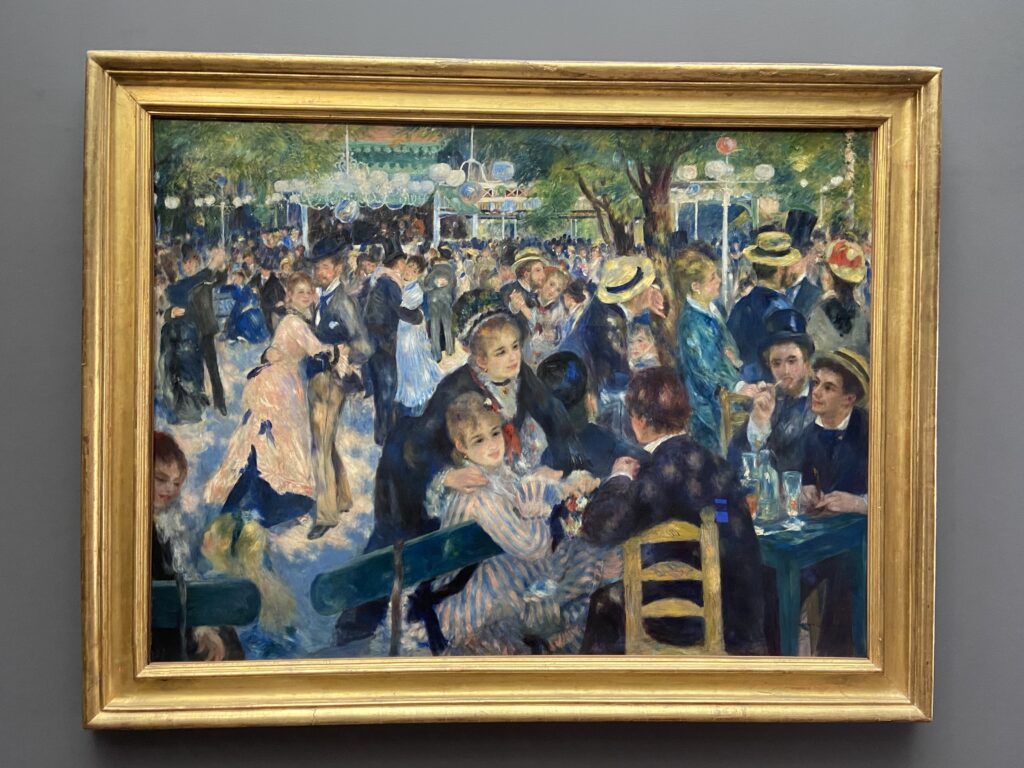
Bal du moulin de la Galette, Auguste Renoir, 1876
This Renoir piece is one of my favorite artworks of all time. I even have the sticker version of it on my laptop! I love the way the light peeks through the trees, illuminating the figures as they move around. A moment of joy, frozen in time. The movement of the people dancing is vivid. The sharpness of the foreground and the gradual blurring of those in the background provide a distinction of depth, the illusion of one actually being there, witnessing the scene with their own eyes.
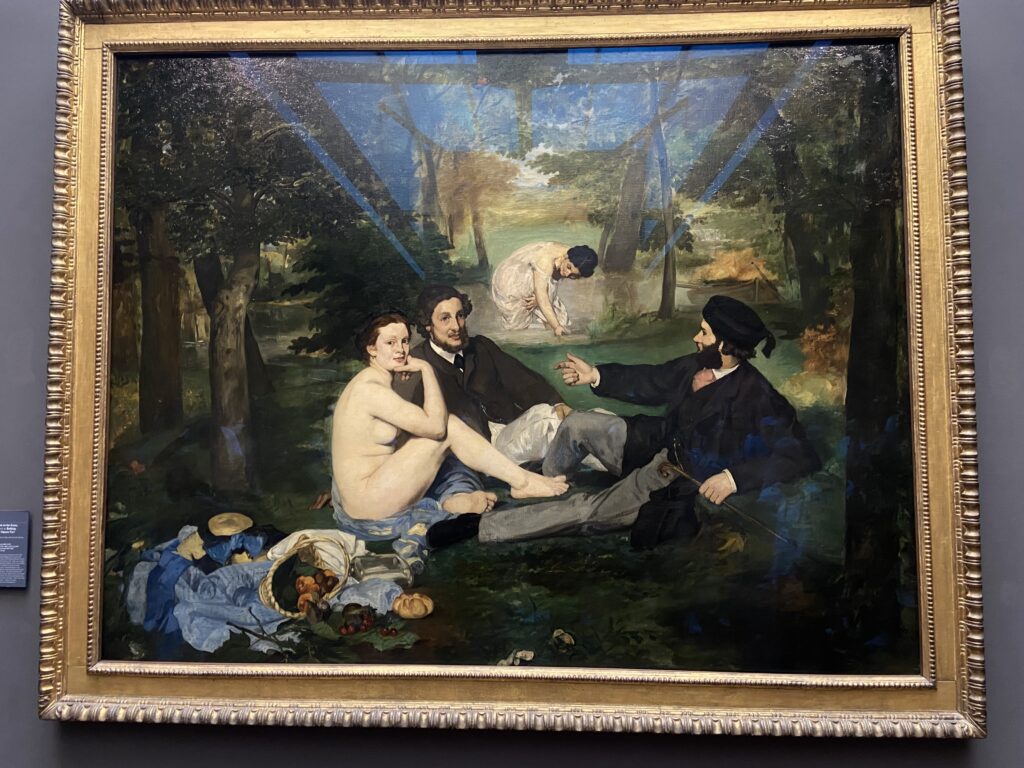
Le dejeuner sur l’herbe, Edouard Manet, 1863
This piece appears to be mythological, though it is in a modern setting. Perhaps it is the way the man on the right’s hand is positioned that references Michelangelo’s The Creation of Adam, or the way the nude woman is posed, showing her curves, that invokes such thoughts. It is also likely that Manet just wanted to paint some skin amongst the dark background, contrasting it with the fully clothed men. I also spy a reference to still life in the food sprawled across a billowing blanket. You sly dog, Manet. I see what you’re doing!
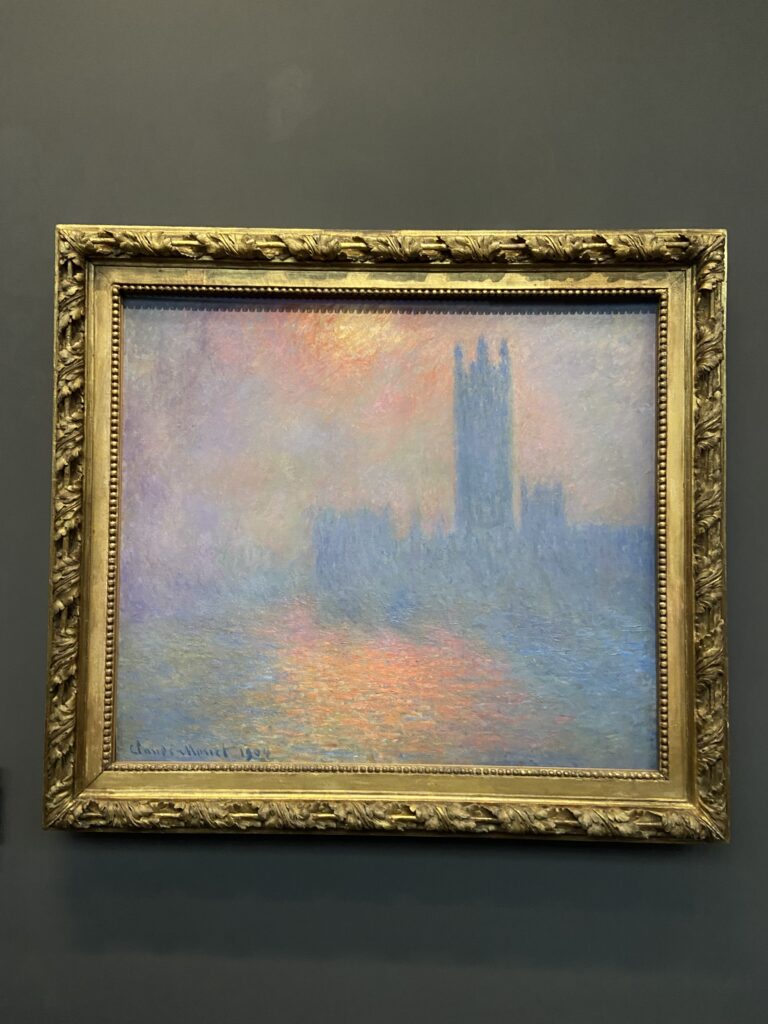
London, the Houses of Parliament, Sunlight Opening in Fog, Claude Monet, 1904
In this painting, the Houses of Parliament in London appear like an apparition, something you have to stare at for quite a while to conceive. The shape of the structure is a shadow of blue cascading over the orange and purple background. The lines designating between water, land, and sky disappear, dissolving into each other, leaving the viewer dazed. Sometimes with impressionist artworks, I like to squint to blur the brushstrokes. It allows me to focus on the most important details.
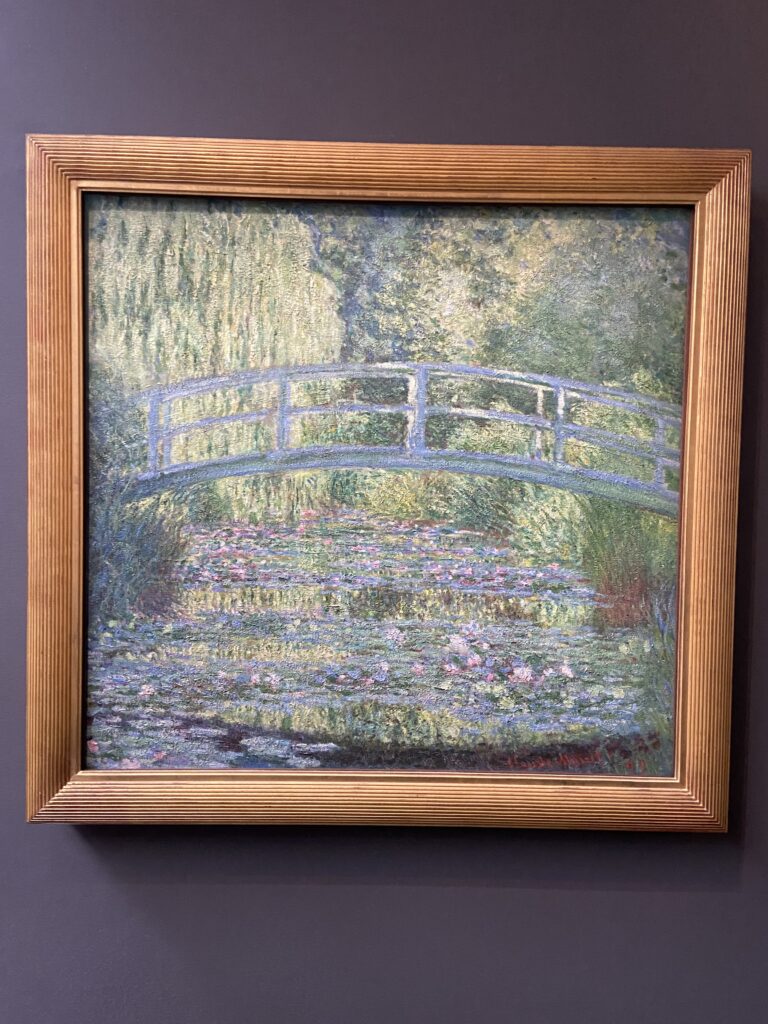
The Water Lily Pond, Claude Monet, 1899
I was particularly excited to see this Monet piece in person. The photo capabilities of an iPhone 11 do not do it justice. Monet decided to put this bridge over a pond in Giverny without the intent of painting it; he planted the water lilies and other vegetation for fun. Soon, his gardens became overwhelmed with plant growth, which served as inspiration for him. I mean, how could it not? What I love about this painting, and Monet’s work in general, is that it’s essentially just paint splashed on the surface with loose brushwork, a main criticism of the Impressionist movement. But it becomes real. What the viewer sees in a great Impressionist painting is the reality of what the painter saw, too.